It is the wish of every married couple to give birth to healthy babies.
However, the joy of Atia Salifu and his wife was cut short when they welcomed their first child with severe deformities.
The couple, who are illegal miners at Datoku in the Talensi District of the Upper East Region, could not come to terms with the situation after the baby was born with limb abnormalities (missing limbs).
According to them, the baby was rushed to several health facilities within and outside the district, but health officials were unable to offer any medical solution due to the nature of the condition.
A similar story is that of Azure Nsoma, a resident of Gbane, another illegal mining community in the district.
Her newborn baby was diagnosed with a congenital heart defect, a condition involving malformation of the heart’s structure.
“I am still hoping that one hospital can help my baby,” she said, as she continues moving from one health facility to another in search of medical care.
Situation
According to health officials, cases of babies born with abnormalities appear to be more common in mining communities across the Talensi District.
Data from the Talensi District Health Directorate indicate that at least six babies have been born with various congenital abnormalities over the past few years. Conditions include gastroenteritis, cleft palate, unidentified sex, congenital heart defects and limb abnormalities.
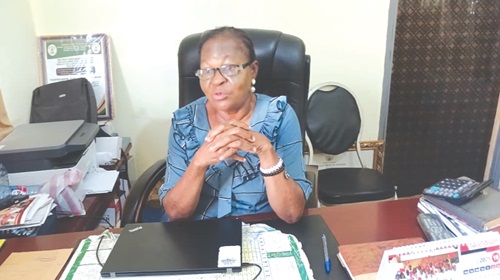
In an interview with the Daily Graphic, the Talensi District Director of Health Services, Juliana Akugri Anam-Erime, said that although the directorate could not scientifically establish a direct link, there was strong suspicion that the abnormalities were a result of illegal mining activities in the area.
“Interestingly, these cases have all been recorded within illegal mining zones. Communities without mining activities have not recorded such conditions,” she stated.
Ms Anam-Erime added that illegal mining exposes residents, especially pregnant women, to harmful chemicals such as mercury and cyanide, which could pose serious risks to unborn children.
Illegal mining activities
The situation is not unique to Talensi. Visits to Charikpong in the Nadowli-Kaleo District in the Upper West Region, and Nipa Nikro in the Tain District of the Bono Region, revealed that illegal mining activities were rampant in these communities.

Some residents report health complications such as skin rashes, stomach upsets, and other unexplained conditions, which they attribute to drinking water from polluted streams and boreholes within the mining zones.
A resident, Samuel Agyemang, told the Daily Graphic that the usual sources of drinking water had been heavily contaminated by mining activities, raising concerns about long-term health effects on the population.
Volta River Basin
The White, Black, and Red Volta rivers are the main freshwater systems serving as lifelines for thousands of people across the Northern, North East, Upper West, Savannah and Upper East regions.

However, the surge in illegal mining activities, popularly known as galamsey and other human activities along the Volta River Basin, has triggered alarming levels of water contamination.
Across Northern Ghana, several water bodies are currently under siege from illegal mining operations, polluting rivers, streams, and lakes with devastating consequences on aquatic life and communities that depend on them for domestic and agricultural use.
The largely uncontrolled activities often result in the discharge of toxic substances, including mercury and cyanide, into rivers and streams. Just as in Southern Ghana, many water bodies in the north are being polluted with impunity, with local communities bearing the brunt of the environmental and public health consequences.
Over the past three months, visits by the Daily Graphic to several mining communities in the Upper West, Upper East, Bono, and Savannah regions have revealed widespread illegal mining along the banks of major water bodies.
The investigations uncovered that miners, both locals and foreigners, were operating openly, often in disregard of community leaders and state authorities. Affected communities include Charikpong, Nipa Nikro, Zongoyire, and Bamboi, all located along or within the Volta River Basin.
Contamination
A water quality assessment conducted on the White Volta River revealed high levels of dangerous heavy metals due to illegal mining and other human activities.
Tests conducted by the CSIR-Water Research Institute and TAMA Foundation Universal showed high levels of mercury, cadmium, lead, cyanide, iron, arsenic, and other heavy metals in the Volta River and its tributaries.
The findings revealed widespread contamination, with several parameters far exceeding international drinking water standards set by the Ghana Standards Authority (GSA) and the World Health Organisation (WHO).
For instance, Cadmium (Cd) exhibited a mean concentration of 1.544 mg/L, exceeding the WHO guideline of 0.003 mg/L with maximum values of 11.610 mg/L. Similarly, lead (Pb) recorded a maximum value of 1.744mg/L with a mean value of 0.177 mg/L, far above the acceptable limit of 0.010 mg/L.
Chromium (Cr) levels were also concerning, with a mean concentration of 0.256 mg/L and maximum values of 1.405mg/L, higher than the permissible limit of 0.050 mg/L.
Additionally, cyanide (CN), commonly associated with gold processing and illegal mining activities, showed a mean concentration of 0.211 mg/L, higher than the recommended limit of 0.07 mg/L, with peak values reaching 1.220 mg/L.
Although mercury (Hg) and arsenic (As) remained mostly within guideline limits on average, their maximum concentrations exceeded safe thresholds in some locations, suggesting localised pollution hotspots along the river system.
Also, iron (Fe) recorded a mean concentration of 0.706 mg/L, more than double the recommended limit of 0.300 mg/L, and a maximum concentration of 3.320 mg/L.
While iron is an essential nutrient, excessive levels can cause unpleasant taste, staining of household items, and long-term health complications when consumed untreated.
Copper (Cu) also showed elevated levels, with a mean concentration of 1.380 mg/L and a maximum of 7.942 mg/L, in some locations exceeding the 2.000 mg/L safety threshold.
Threat
Explaining the findings, a Research Scientist of the CSIR-Water Research Institute, Zita Naangmenyele Abuntori, said the upper and middle belts of the river were experiencing significant heavy metal contamination, making them the most affected sections of the basin.
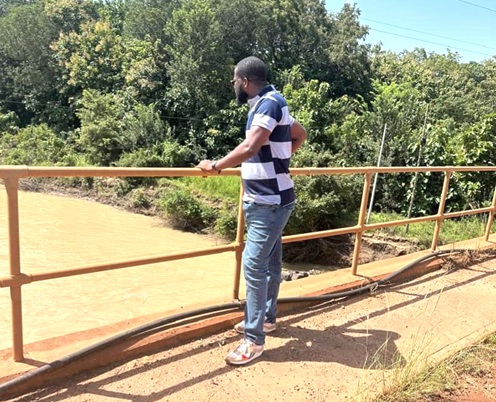
However, the lower belt of the Volta, particularly from the confluence downstream, remained relatively free of heavy metal pollution.
She identified cadmium, lead, chromium, and cyanide as the most dominant contaminants detected in the water samples, noting that their concentrations posed potential risks to both human health and aquatic ecosystems.
Observation
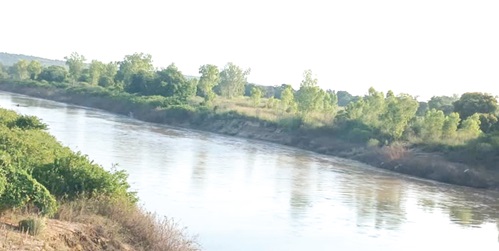
Back at the Upper East Region, the Red Volta, which stretches from neighbouring Burkina Faso through the Bawku West and Nabdam districts, is increasingly coming under severe pollution pressure, largely from human activities along its banks.
During a visit, it was observed that the river had turned dark brown, indicating heavy siltation and possible upstream pollution. The river is a major source of drinking water and irrigation, making its deterioration a growing concern for residents.
The Assemblyman for the Tilli Electoral Area, James Atia, told the Daily Graphic that illegal miners, sand winers, and herders had invaded the Red Volta East and West Forest Reserves, which once protected the river.
He said the destruction of these reserves had exposed the river to direct pollution and accelerated degradation.
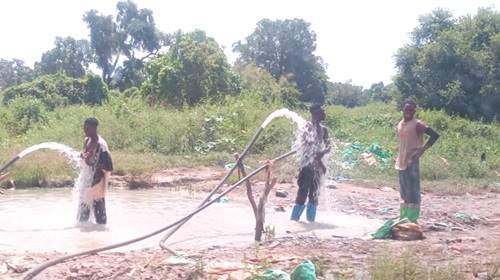
At the Datoku mining site, hundreds of illegal miners had pitched camp along the river.
The river, which serves the local community, has become heavily silted and is gradually drying up.
Some miners wash mining tailings directly into the river, while others pump water for their mining activities.
The leader of the illegal miners at the site, Voronbahaya Bamara, admitted that their activities were harming the river.
He said pollution of the water body had begun to affect even the miners, noting they were now buying water for domestic purposes.
Environmental threat
Beyond human health, pollution of the rivers is also taking a heavy toll on aquatic life, threatening fish stocks and the broader ecosystem.
The Executive Director of TAMA Foundation Universal, Dr Chrys Anab, who is also an environmental and natural resource governance expert, said illegal mining was not only degrading water bodies but also undermining youth development in the affected areas.
He explained that many energetic young people, who should be acquiring skills or engaging in sustainable livelihoods, were instead being drawn into illegal mining activities, with its long-term consequences on community development.
He said illegal mining was gaining notoriety in the region, with severe consequences for rivers and other water bodies that communities depend on for survival.
He, therefore, called for the strict enforcement of existing laws and regulations protecting water bodies, as well as the adoption of pragmatic and sustainable measures to address the situation and prevent further environmental degradation.
Dr Anab added that TAMA Foundation Universal, through its Action for Voice, Influence and Inclusive Development (AVID II) Project, had intensified public sensitisation and community engagement efforts aimed at promoting evidence-based advocacy, accountability and inclusive natural resource governance.
Urgent call
For his part, a retired Professor, Saa Dittoh of the University for Development Studies, said mining in all its forms had devastating environmental impacts and must be treated with utmost caution.
“No amount of gold can pay for the damage caused to the ecosystem,” he stated.
Professor Dittoh called for stronger political will, improved inter-agency coordination, and a deeper understanding of the complexities of illegal mining, stressing that efforts to end the practice must go beyond public rhetoric.
“Ending illegal mining requires the full commitment of the political class,” he said.
Way Forward
Rivers, lakes, streams, and other water bodies, once vital for life and livelihoods, are at risk of becoming irreversible casualties of galamsey.
The health of these water bodies is not just an environmental concern but directly affects the well-being and future of local communities.
Goal Six of the Sustainable Development Goals (SDGs) seeks to ensure safe drinking water and sanitation for all, promoting sustainable management of water resources, wastewater, and ecosystems by 2030.
Similarly, Goal 15 aims to protect, restore, and sustainably use terrestrial ecosystems, manage forests, combat desertification, halt land degradation and prevent biodiversity loss.
However, the indiscriminate destruction of rivers and streams by illegal miners threatens the country’s progress toward these goals.
Authorities are therefore urged to step up efforts to clamp down on illegal mining and other human activities to safeguard the Volta River Basin, which is the country’s precious water resource.
Writer’s email:mohammed.fugu@graphic.com.gh