
Stakeholders Renew Calls for Sustainable Mining in Northern Ghana.
Bolgatanga, Ghana – Stakeholders in Ghana’s extractive sector have renewed calls for sustainable mining practices and increased socio-economic benefits for mining communities, warning that current mining activities across northern Ghana pose serious threats to livelihoods, food security, the environment, and the future of children.
They stressed that while mineral resources remain important national assets, unsustainable mining practices in the five northern regions are undermining agriculture, polluting water bodies, and deepening social challenges in already fragile communities.
Mining, Agriculture and Environmental Sustainability
Northern Ghana is predominantly agrarian, with communities relying heavily on farming and natural water sources for survival. However, stakeholders noted that expanding mining concessions are increasingly encroaching on farmlands and polluting rivers and streams, threatening both livelihoods and food security.
“Northern Ghana depends largely on agriculture, but mining concessions are taking away farmlands and polluting water sources,”
— Dr. Chrys Anab, Executive Director, TAMA Foundation Universal.
Dr. Anab explained that mining must be carried out in a manner that complements agriculture rather than destroys it, especially given the region’s fragile ecology and short rainfall period.
Evidence of Environmental and Health Risks
Dr. Anab revealed findings from a recent study conducted by TAMA Foundation Universal in collaboration with the Water Research Institute of the Council for Scientific and Industrial Research (CSIR-WRI), which detected heavy metals such as mercury and cyanide in water samples taken along the White Volta.
These contaminants pose serious public health risks and further threaten farming and fishing activities along the river basin.
TAMA Foundation clarified that it is not opposed to mining, but strongly advocates responsible and sustainable mining practices that deliver tangible benefits to host communities.
“Mining, if done sustainably, can complement agriculture, but not in the chaotic manner we currently see across mining districts,”
— Dr. Chrys Ana
Capacity Building for Community Monitoring and Accountability
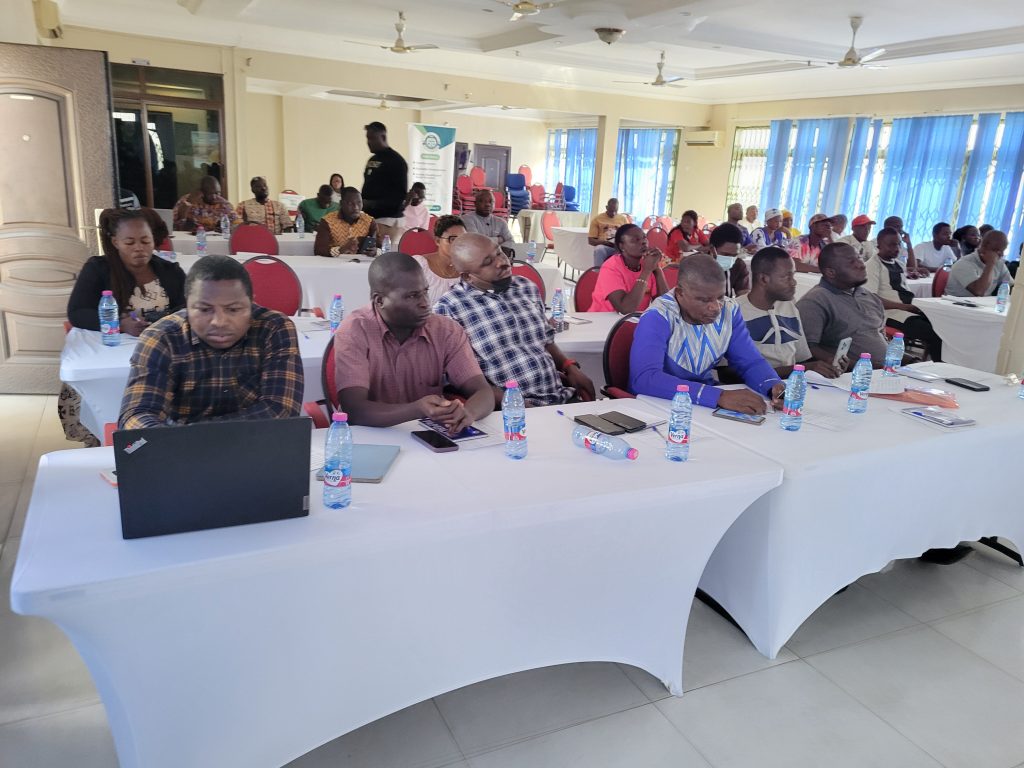
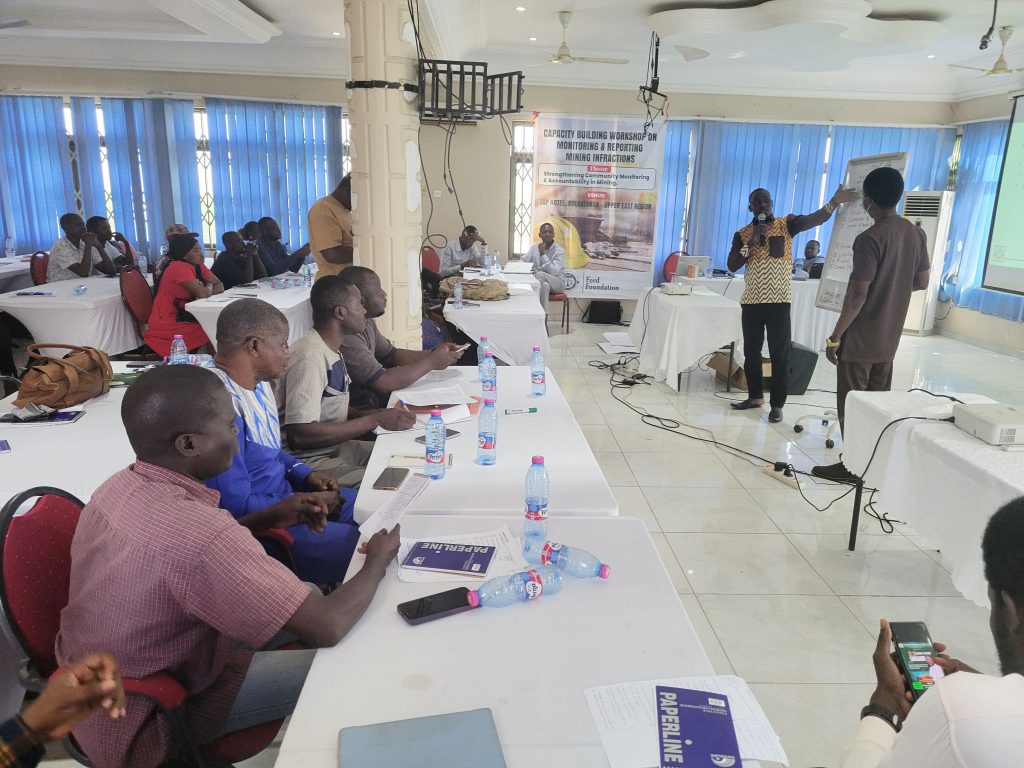
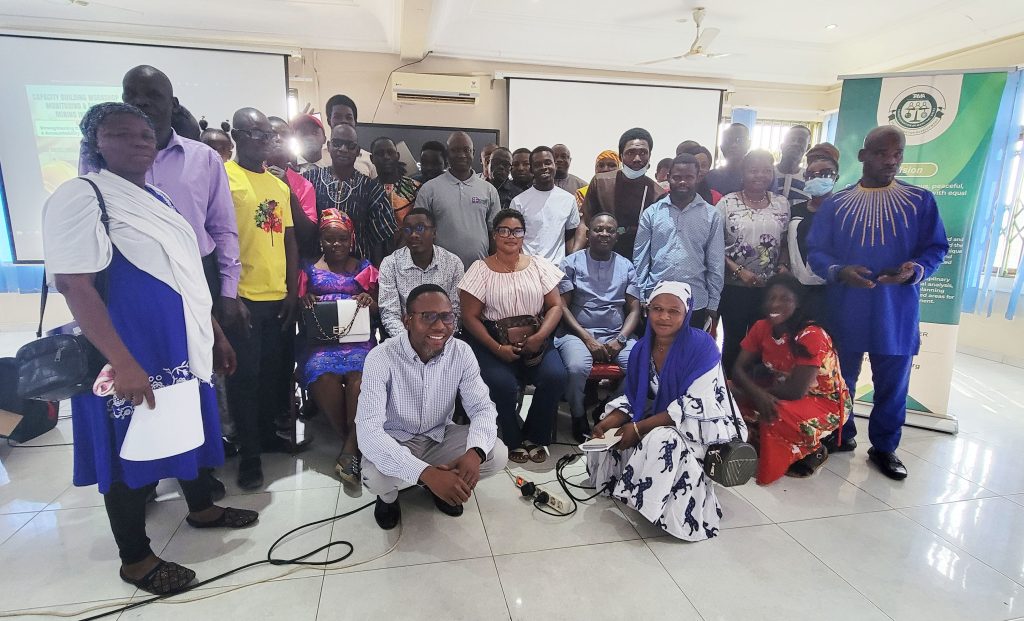
The concerns were raised at a two-day capacity-building workshop held in Bolgatanga, which brought together participants from mining communities, civil society organisations, government institutions, and district assemblies from the five northern regions.
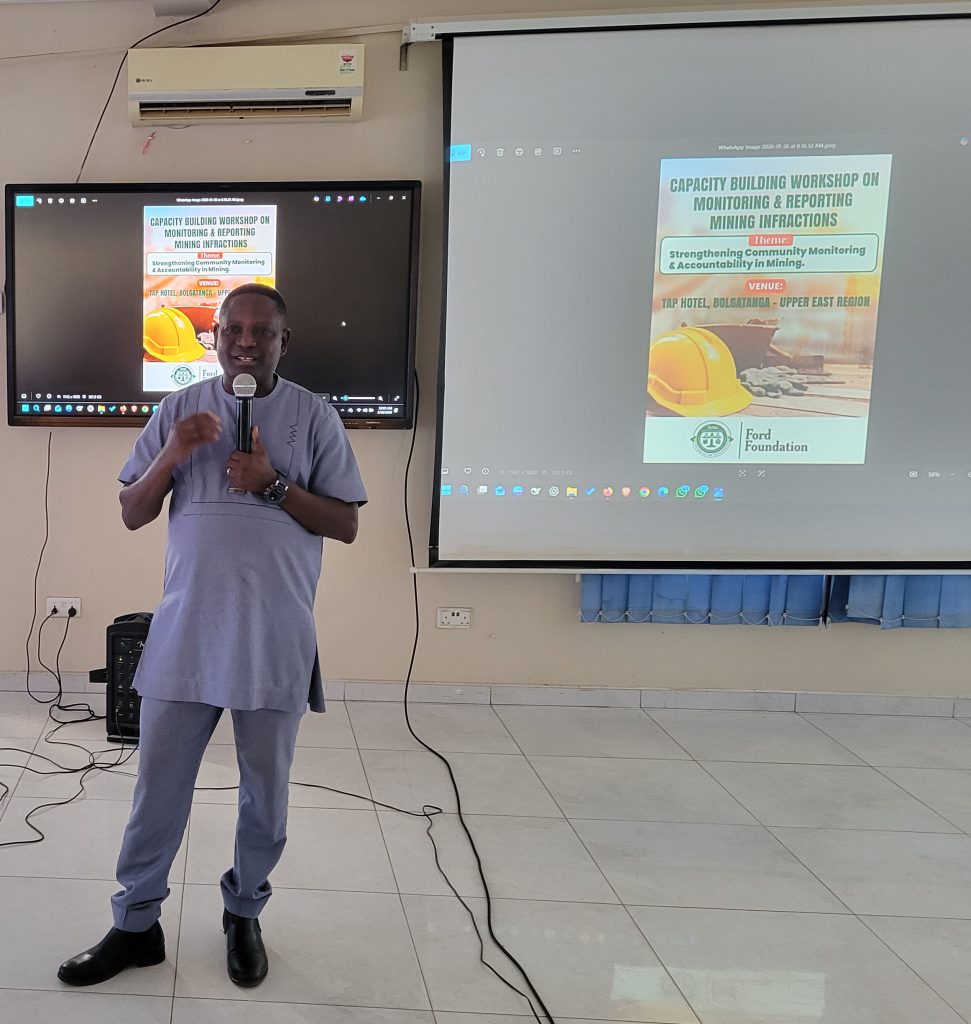
The workshop, themed “Community Monitoring and Reporting of Mining Infractions,” was organised by TAMA Foundation Universal under the Natural Resource Accountability in Northern Ghana (NaRAING) Project.
The training aimed to:
-
Strengthen community-led accountability and early warning systems
-
Build the capacity of community action groups, paralegals, traditional authorities, and civil society organisations
-
Improve identification, documentation, and reporting of mining infractions
-
Promote constructive engagement with duty bearers and regulatory institutions.
Call for Stronger Regulation and Enforcement
Dr. Anab called on key regulatory agencies — including the Environmental Protection Authority (EPA), Minerals Commission, Water Resources Commission, and Forestry Commission — to strengthen enforcement of existing laws and ensure mining companies comply with environmental and social safeguards.
He commended government for the repeal of Legislative Instrument (LI) 2462, which allowed mining in forest reserves, describing it as a positive step, though not a complete solution.
“If this law is complemented with strong enforcement, technology deployment, and skills transfer to local communities, mining can become a blessing rather than a curse,” he said.
Alternative Livelihoods and Youth Empowerment
To reduce dependence on illegal mining, stakeholders urged government to prioritise alternative livelihood programmes, particularly for youth in mining communities. These include:
-
Skills training
-
Access to start-up support
-
Linkages to decent employment opportunities
Such interventions, they noted, would help curb environmental degradation while addressing unemployment and poverty.
Social Impacts: Child Labour and Education
Participants also raised concerns about the growing social impact of mining, particularly child labour and school dropouts.
Mr. Nyeya Yen, Chairman of the Savannah Research and Advocacy Network, noted that children of school-going age were increasingly found at mining sites instead of in classrooms.
He described child involvement in mining as one of the worst forms of child labour, exposing children to hazardous chemicals and unsafe working conditions, and called for coordinated action by parents, government institutions, and local authorities.
Transparency, Media and Traditional Leadership
Stakeholders appealed to regulatory agencies to make environmental impact assessment (EIA) reports publicly accessible, and called on the media and traditional authorities to work closely with civil society to address conflicts and ensure mining resources contribute to peaceful and resilient communities.
Nab Mwarebilsong Naneeteng, Chief of Gaare, commended TAMA Foundation and its partners, noting that the workshop had empowered him as a traditional leader to demand sustainable mining practices and fairer benefits for communities.
Conclusion: Toward Responsible Mining in Northern Ghana.
Stakeholders agreed that Ghana’s mining sector can support development only if it balances economic growth, environmental protection, and community well-being. Sustainable mining, strengthened regulation, community participation, and transparency were identified as critical to ensuring mining becomes a force for inclusive and lasting development in northern Ghana.
By Anthony Adongo Apubeo, GNA
Edited by Caesar Abagali / Christabel Addo